What are they fighting against?

Hackers
Hacking refers to the practice of exploiting weaknesses in computer systems, networks, or software to gain unauthorized access or control. While often associated with malicious activities, hacking can also be ethical. Black hat hackers engage in illegal activities, such as stealing data, spreading malware, or causing disruptions. White hat hackers, on the other hand, use their skills for good, helping organizations identify and fix security vulnerabilities. Gray hat hackers fall somewhere in between, sometimes breaking the law but without malicious intent. Hacking techniques vary widely, from phishing and social engineering to more technical methods like exploiting software vulnerabilities or using brute force attacks. The goal can range from financial gain and data theft to activism or simply the challenge of breaking into a system. Understanding hacking is crucial for improving cybersecurity measures and protecting sensitive information from potential threats.

Phishing
Phishing is a type of cyber attack where attackers deceive individuals into providing sensitive information, such as usernames, passwords, or credit card details. This is typically done by masquerading as a trustworthy entity in electronic communications, like emails, text messages, or websites. Phishing attacks often involve creating fake websites that look nearly identical to legitimate ones, or sending emails that appear to come from reputable sources. These messages usually contain urgent or enticing prompts, encouraging recipients to click on malicious links or download harmful attachments. The primary goal of phishing is to steal personal information for financial gain, identity theft, or unauthorized access to systems. To protect against phishing, it's important to verify the authenticity of unsolicited communications, avoid clicking on suspicious links, and use security measures like multi-factor authentication and email filtering. Understanding phishing is crucial for maintaining cybersecurity and protecting personal and organizational data from potential threats.
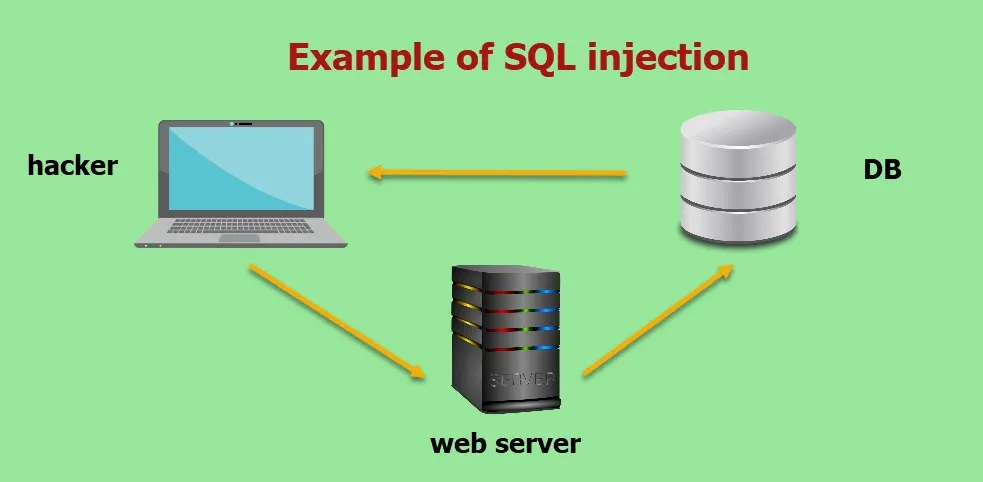
SQL Injections
SQL injection is a type of cyber attack where malicious SQL code is inserted into a query to manipulate a database. This technique exploits vulnerabilities in web applications that do not properly sanitize user inputs, allowing attackers to execute arbitrary SQL commands. The primary goal of an SQL injection attack is to gain unauthorized access to a database, which can lead to data theft, data manipulation, or even complete control over the affected system. Attackers can retrieve sensitive information, such as usernames, passwords, and financial data, or alter database records to disrupt operations. To perform an SQL injection, an attacker typically inputs malicious SQL statements into a form field or URL parameter. If the application does not validate or escape these inputs, the database executes the injected code. Preventing SQL injection involves implementing robust input validation, using parameterized queries, and employing prepared statements. Regular security testing and code reviews are also essential to identify and fix vulnerabilities before they can be exploited. Understanding SQL injection is crucial for developers and security professionals to protect web applications and sensitive data from potential threats.

Insider Threats
Insider threats in cybersecurity refer to risks posed by individuals within an organization who have access to sensitive information and systems. These threats can come from employees, contractors, or business partners who misuse their access, either intentionally or unintentionally. **Intentional insider threats** involve malicious actions, such as stealing data, sabotaging systems, or leaking confidential information. These insiders may be motivated by financial gain, revenge, or espionage. **Unintentional insider threats** occur when individuals inadvertently compromise security through negligence, such as falling for phishing scams, mishandling sensitive data, or failing to follow security protocols. Insider threats are particularly challenging to detect and mitigate because they involve trusted individuals with legitimate access. To protect against these threats, organizations should implement comprehensive security policies, conduct regular training and awareness programs, and use monitoring tools to detect unusual activities. Additionally, enforcing the principle of least privilege—granting users the minimum access necessary for their roles—can help minimize potential damage. Understanding and addressing insider threats is crucial for maintaining robust cybersecurity and protecting sensitive information from internal risks.